Selected Work
These selected projects show how I’ve worked across the arc of meaningful work: listening to context, shaping proposals and programs, building implementation systems, supporting learning, and helping people coordinate in practice.
They span international development, climate innovation, field research, participatory storytelling, and neighbourhood practice — different settings that shaped how I think about the practical structures that help work take root, stay coherent, and continue.
International Youth Internship Program
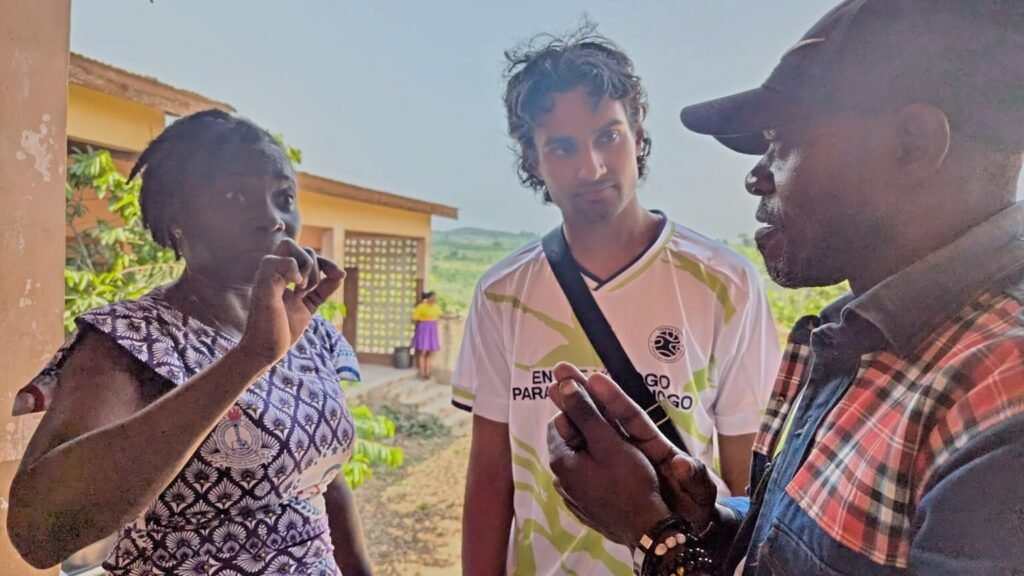
A collaborative $4.9M initiative developed with Schools of Dreams, Empowerment Squared, and McMaster University to support 100 Black and other marginalized Canadian youth through international internship experiences in West Africa.
My role: I co-led proposal development and supported early implementation, helping translate the initial vision into a fundable program architecture, Ghana-based partnerships and operations, safeguarding practices, coordination structures, a learning framework, and a locally informed research plan.
Relevant capacities: proposal development, program design, participatory consultation, partnership coordination, implementation systems, Ghana operations, safeguarding, learning and evaluation, research planning
Read more about this project
This project began as a proposal, but quickly became a systems-design challenge: how to turn a meaningful opportunity into a program with enough structure, clarity, care, and adaptability to support young people across countries, institutions, and roles.
The work required moving between proposal development, partnership coordination, operational planning, safeguarding, research design, and learning. As part of the research design process, I consulted with Ghanaian community members, education experts, and local universities so the Ghana-based research plan could be shaped by local knowledge, context, and priorities.
I also helped translate the program’s purpose into practical structures — including budgets, timelines, staffing, roles, and coordination practices — while staying close to the realities of the young people the program was designed to support.
This project strengthened my understanding that good programs are not only built from strong ideas. They depend on the less visible infrastructure around the idea: relationships, role clarity, decision-making, resources, safety, communication, accountability, and learning practices that help the work adapt over time.
CarbiCrete Sustainable Concrete Project

CarbiCrete is a climate technology company working to commercialize cement-free concrete technology and reduce emissions in the built environment.
My role: I supported proposal development for a $3.4M funded project within an $8M climate innovation initiative through research synthesis, narrative drafting, and coordination with senior leadership. I also supported commercialization strategy by analyzing markets, researching carbon capture and utilization pathways, developing a localized CO₂ sourcing strategy, conducting supply-chain analysis, mapping suppliers and customers, and creating executive-level roadmap visuals.
Relevant capacities: proposal development, climate innovation, commercialization strategy, research synthesis, market analysis, CO₂ sourcing, supply-chain mapping, technical translation, executive communication
Read more about this project
This project placed me inside the practical complexity of climate innovation: not only whether a technology could work, but what conditions would help it move toward commercial-scale implementation.
The work required moving between technical research, commercialization strategy, funding communication, and operational planning. I helped translate detailed information about markets, carbon utilization, supply chains, and manufacturing conditions into clearer strategic materials for decision-making and growth.
I also developed commercialization roadmap visuals in collaboration with senior leadership and supported strategic planning around the market, regulatory, capital, and operational conditions shaping climate technology adoption. Through CarbiCrete’s participation in the Google Startups Accelerator: Climate Change, I deepened my understanding of product design, customer acquisition, technical infrastructure, and startup growth strategy.
This experience strengthened my ability to move between technical detail, strategic narrative, and the conditions for implementation. It also shaped how I think about systems change: good ideas and promising technologies still need partnerships, supply chains, financing, regulation, communication, and implementation pathways before they can move from promise into practice.
Numida / Engineers Without Borders Canada
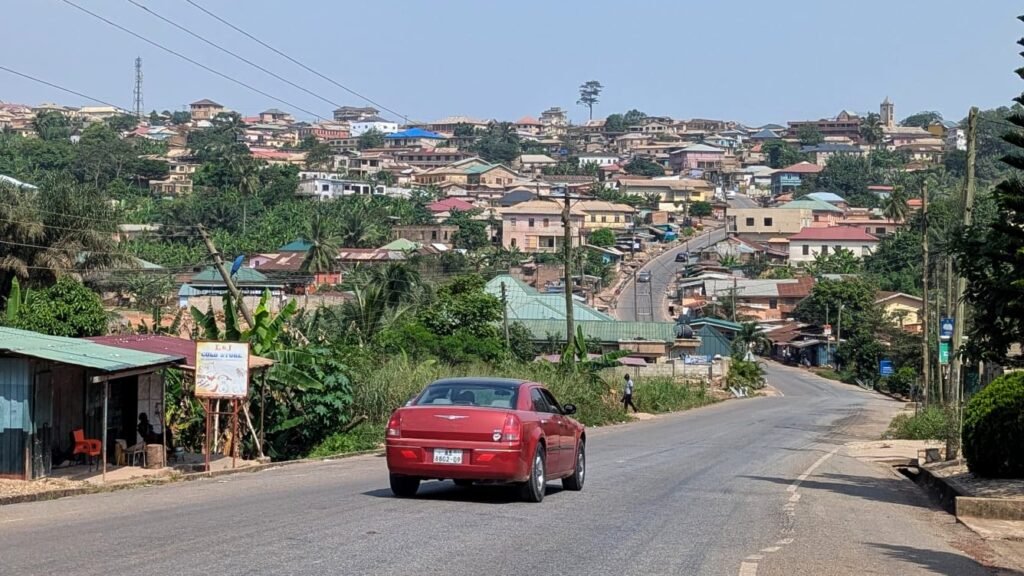
As a Junior Fellow with Engineers Without Borders Canada, I worked with Numida in Kampala, Uganda on field research connected to financial access, product development, and user experience for small business owners.
My role: I conducted 200+ field interviews with small business owners about their financial realities, loan application experiences, business constraints, and hopes for growth, then helped translate those conversations into insights for product development and organizational learning.
Relevant capacities: field research, user research, financial access, product development, UX feedback, research synthesis, insight translation, grounded inquiry
Read more about this project
This project deepened my understanding of what it means to design from lived reality rather than assumption. The work required listening closely to how people understood their own needs, constraints, decisions, and possibilities.
Through conversations in Kampala, I learned about the practical realities shaping access to capital: trust, documentation, repayment pressure, family obligations, business volatility, digital tools, and the everyday risks of trying to grow a livelihood.
I helped bring those insights back into product and organizational conversations, where they could clarify user needs, product friction, and opportunities for internal learning.
This experience shaped my commitment to grounded inquiry: before designing a program, product, or system, I begin by understanding how people are already navigating the conditions around them.
Youth in Care Documentary Project

A youth-led documentary and storytelling project centering the experiences of young people connected to Ontario’s child welfare system, culminating in a public premiere attended by 300+ people at TIFF Bell Lightbox.
My role: As co-director and music director, my work included shaping the creative direction, composing original music, helping hold space for youth-led storytelling and group conversations, and coordinating toward a completed film and public premiere.
Relevant capacities: youth-led storytelling, creative direction, youth engagement, original music, group process, public engagement, event coordination, process stewardship
Read more about this project
This project taught me about the care required when personal experience becomes public story. The work was not only about making a film; it was about supporting a process where young people could explore what they wanted to say, how they wanted to say it, and what conditions would help that expression feel possible.
Because the story was rooted in lived experiences that were not mine, part of the work was listening carefully and creating space for youth voice rather than centering my own perspective. The creative and practical work — from music and tone to coordination and public presentation — needed to support that larger purpose.
The project deepened my respect for storytelling as a form of participation and public learning. It also shaped how I think about process design: when work involves lived experience, the structures around the work need to protect agency, trust, consent, and care.
Neighbourhood Practice

Alongside organizational work, I have been practicing small-scale community-building through neighbourhood gatherings, shared meals, local invitations, and relationship-building close to home.
My role: I have organized and helped sustain recurring potlucks, informal gatherings, conversations, and small experiments that help neighbours become more visible to one another and create simple rhythms for connection, mutual support, and shared local life.
Relevant capacities: community-building, local invitation, neighbourhood belonging, gathering design, relationship-building, mutual support, place-based practice, social infrastructure
Read more about this project
This practice has been informal and relational, but it has shaped my understanding of what helps community become real in everyday life. Belonging often depends on simple structures: a recurring invitation, a shared meal, a familiar place, a reason to gather, and enough consistency for trust to grow over time.
Through this practice, I have been learning how small acts of coordination can create openings for connection: who is invited, how people arrive, what makes participation easy, and what helps relationships continue beyond a single event.
This has influenced how I think about social infrastructure. Sometimes the work is not to create a large program, but to notice what would help people become more available to one another — and to build the simple forms that make that possible.
Current Inquiry
Across these projects, I keep returning to a set of questions: how do people come to understand what is actually needed? How do relationships and systems respond to those needs? What practical structures help meaningful work continue with care, accountability, and learning?
I am currently exploring these questions through writing, conversation, neighbourhood practice, and small experiments. Over time, I hope it can grow into a public home for tools, stories, living experiments, and shared learning about how systems can become more responsive to what people and places need, more honest about tradeoffs, and more supportive of wellbeing.
If this direction resonates, I’d be glad to be in conversation.